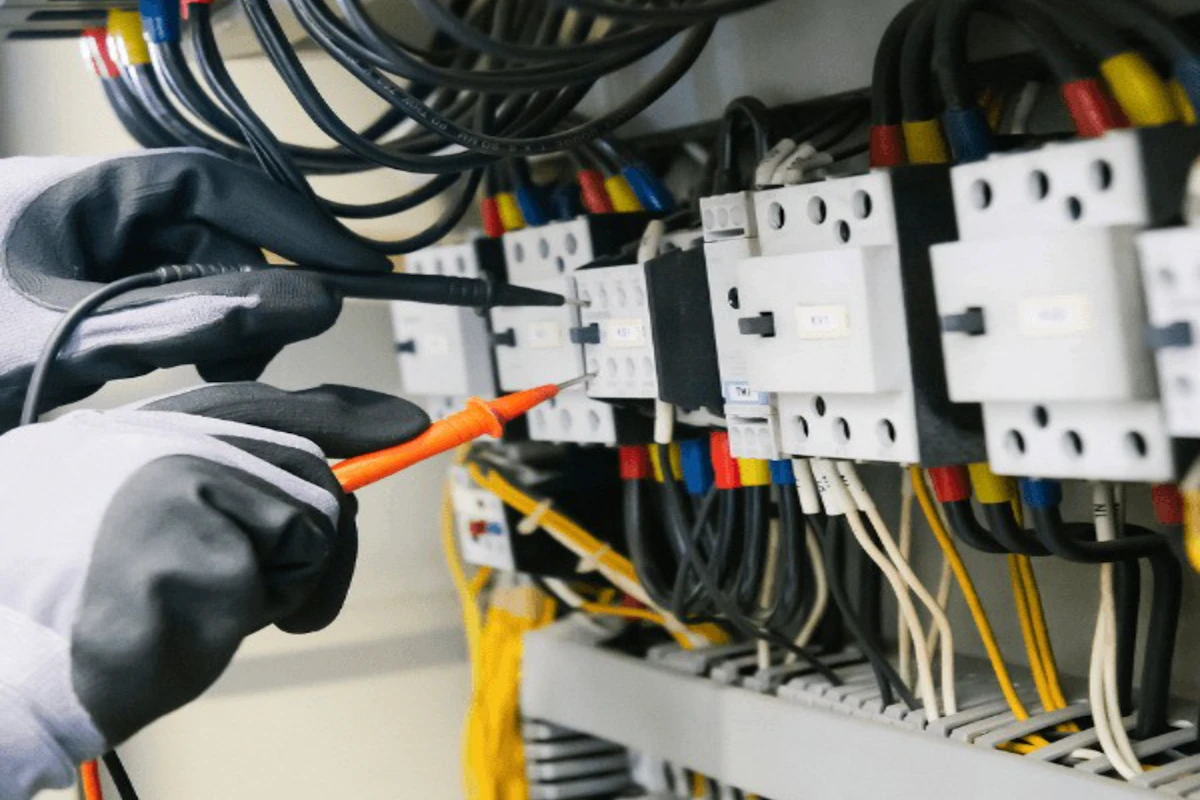
A solar PV system has a DC side from the panels to the inverter and an AC side connected to the building wiring. We assess electrical safety on both sides within the agreed scope. Generation figures in an app do not replace tests of protective measures.
Service details
Which equipment we cover and what we check
We set the scope according to capacity, number of strings, inverters and connection type. Tell us about batteries, backup outputs and other power sources. For an extension, we distinguish new parts and their connections to the existing installation.
What we check
Documentation and visual inspection
Wiring and labelling, accessible cables and connectors, distribution boards, isolation, overcurrent protection and protective devices.
DC side and strings
Depending on the configuration, check polarity, insulation and relevant electrical parameters for each string.
AC side and protective measures
Associated circuits, protective conductors and bonding, inverter connection and relevant electrical safety tests.
How to prepare for the technician’s visit
Have the as-built wiring diagram, string layout, inverter, panel and battery details, manuals and latest report ready. Tell us whether the system connects to the grid and supplies backup circuits. We need access to boards, the inverter and agreed test points.
What to consider when planning
Panels exposed to light can produce DC voltage even after the mains breaker is switched off. A qualified person must isolate and test the system safely. Thermal imaging, panel performance diagnostics and battery servicing are included only by explicit agreement.
Inspection results and next steps
We provide the appropriate inspection report or record for the equipment and work carried out. It identifies the equipment and sets out the scope, results and any defects. We explain the findings and discuss what needs to happen next.
If we find a hazard, any further use depends on how serious it is. We agree any repairs and follow-up checks separately from the measurements.
What customers ask
Frequently asked questions
Is the house’s electrical inspection report sufficient?
Check what it covers. If the report excludes the solar system, its DC circuits and connection, it cannot be assumed to cover the new installation.
Do you inspect battery storage as well?
Include the battery and backup configuration in your enquiry. We’ll set the scope based on the equipment and the manufacturer’s documentation.
Does it need to be sunny during the inspection?
Light and weather affect some measurements. The date and which tests are possible depend on the scope required.
Is thermal imaging included?
Thermal imaging is a separate diagnostic method with its own requirements. If you need it, we’ll agree it separately.
What if I add panels or replace the inverter?
Prepare the updated wiring diagram and details of the new components. An extension can change electrical parameters and protection requirements, so its impact should be professionally assessed.
How we work
Three steps towards implementation.
01
Contact and consultation
You will tell us what you need and where the work is to be done.
02
Solution and offer
After consultation or inspection, we agree the scope and price.
03
Scheduled
Once agreed, we will agree on a date for implementation.